Through the trees the horses move slowly

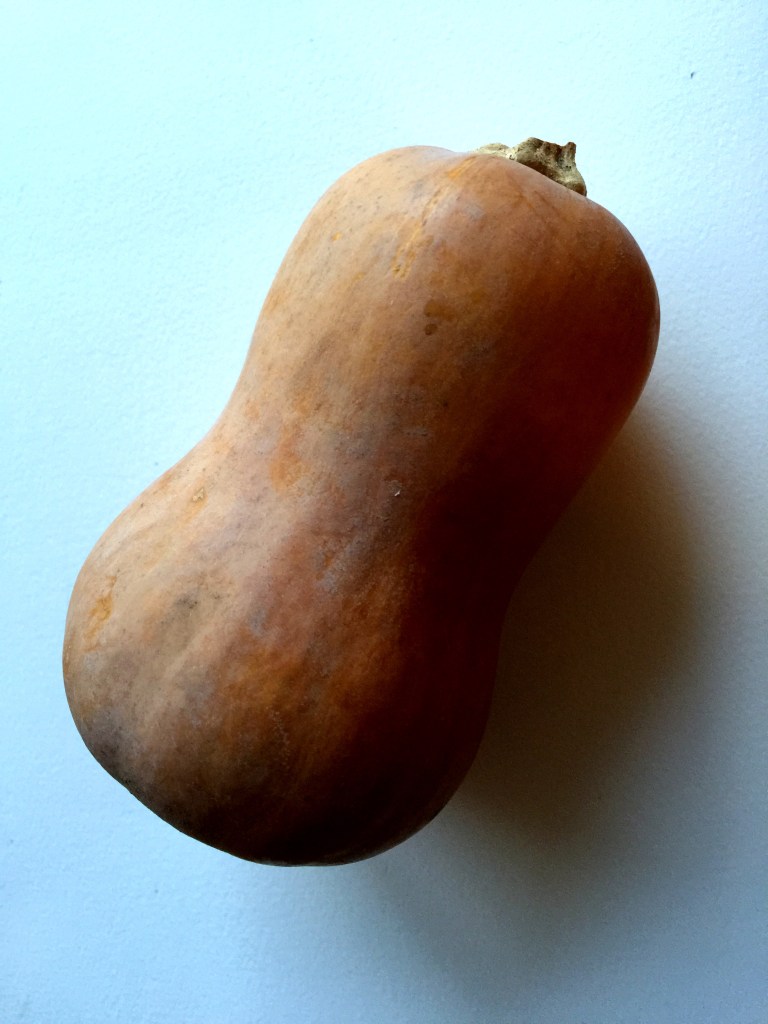
indira Ganesan, Honeynut Squash, 2020

Through the autumn trees, I can see the horses on the neighboring farm move slowly. The leaves themselves are gold, russet, green, with bright red berries scattered throughout. The window is open, and the air is sharp, cold, and the clouds have been putting on such a show of shadowy grays that they must have their own hashtag. All day Deborah Madison’s Vegetarian Cooking for Everyone has been open on my kitchen table like a bible. It is over seven-hundred loose-leaf sized pages, and every so often I look at it as I nibble on this and that. Here is how to prepare dozens of canapés; here is how to remove a baked tart shell from its panwithout it falling apart. Here is how I can take cream, saffron, pine nuts, and pasta, and create a dish fit for a royal feast.

Covid had taken away my cheery dreams of feasts, though ten people can still gather around a table at a time, preferably outdoors. I mostly eat alone, but largely well, unless sheer laziness drives me to crackers and cheese for dinner. Tonight, the election results in the US will roll in, and most everyone’s vote will get counted. If we are lucky, it will be a while to know the results, and sense will prevail. There will needed change. Four years ago, I went to bed early, confident that the vote would tirn out the way I wanted, only to be rudely awakened. I don’t know what will happen tonight. There’s an online election party hosted by a local art gallery I might tune into, and there is the Danish comedy I’m currently catching up on. There is a plate of honeynut coins I fried in olive oil (Vegetarian, p. 440) that might serve as a pizza topping with some sage leaves and crumbly gorgonzola, if I remembered to stock that cheese in the fridge. Every few seconds, I chase my cat off the counter; she doesn’t understand daylight savings time, off the counter, and wants to eat now, right now, omg, this second.

I have a birthday in a few days. One grey hair has found itself to my right eyebrow. I have fifty-nine tulip bulbs to plant this week, the same number as my age today.

Tuesday from Texas

Tuesday October 27 @ 7pm Central Time

Online from Brazos Bookstore

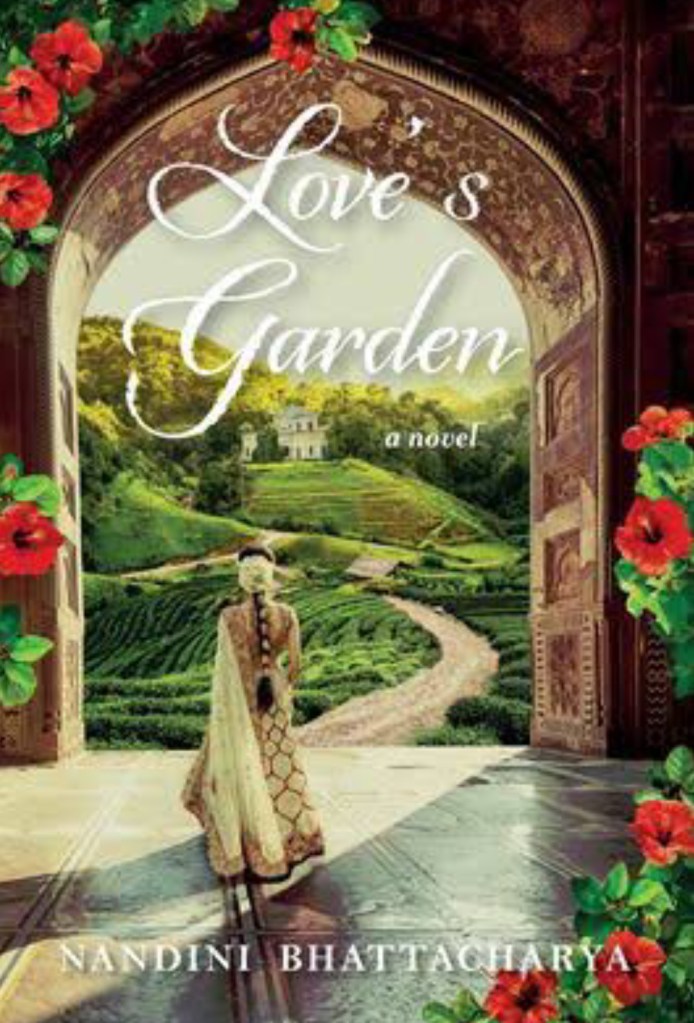
VIRTUAL – Nandini Bhattacharya – LOVE’S GARDEN

START: Tuesday, October 27, 2020 – 7:00pm to 8:00pmLOCATION: Online

This event will take place on ZOOM. Click here to register.

Nandini Bhattacharya will be in conversation with Indira Ganesan. 

LOVE’S GARDEN is set in 1898. India is ruled by the British, and India’s women are ruled by British masters as well as Indian men. A desperate young widow makes a tragic sacrifice to save herself from ultimate dishonor. She marries a stranger for security and shelter, but her damaged second family pays dearly for this Faustian bargain. Then, an extraordinary atonement and strange liaisons in politics and love — spanning the two world wars and the Indian independence movement — help her descendants heal from this traumatic private history. LOVE’S GARDEN demonstrates the strength, resilience, and unbreakable spirit of mothers and daughters navigating layers of oppression, all while the sun is not-so-peacefully setting on British India.

Nandini Bhattacharya was born and raised in India and has called the United States her second continent for the last thirty years. Wherever she has lived, she has generally turned to books for answers to life’s big and small questions. Her short stories have been published in Meat for Tea: the Valley Review, Storyscape Journal, Raising Mothers, The Bacon Review, The Bangalore Review, OyeDrum, and Ozone Park Journal. She has attended the Bread Loaf Writers’ Workshop and held residencies at the Vermont Studio Center, VONA, and Craigardan Writers Residency (forthcoming). She was first runner-up for the Los Angeles Review Flash Fiction contest (2017-2018), a finalist for the Fourth River Folio Contest for Prose Prize (2018), long-listed for the Disquiet International Literary Prize (2019 and 2020), and a finalist for the Reynolds-Price International Women’s Literary Award (2019). Love’s Garden, a work of WWII historical fiction is her first novel and draws on major events surrounding the British Empire in India and especially Calcutta (Kolkata), Indian Independence, the Partition of India, and the lives of Indian women caught up in forbidden love, political drama, and the romance of diversity surrounding the Jewel in the Crown of the British Raj. She is currently working on a second work of literary fiction about love, minorities, racism, and Hindutva politics in India and xenophobic mentalities and other mysteries in Donald Trump’s America, titled Homeland Blues. She is an ardent admirer of Jhumpa Lahiri, Megha Majumdar, Amitav Ghosh, Salman Rushdie, and last but not least, Chimamanda Adichie. She lives outside Houston with her family and two marmalade cats.

Indira Ganesan has written three critically acclaimed novels published by Alfred A. Knopf: The JourneyInheritance, and As Sweet As Honey. Paperbacks and translations have appeared from other houses, including Vintage Books and Beacon Press.  Her fellowships include The Mary Ingraham Bunting Institute of Radcliffe College,  the W.K.Rose Fellowship, The Fine Arts Work Center, and the Paden Institute for Writers of Color. A regional finalist for Granta’s first Best America and Novels Under Forty campaign, her work has been selected as a Barnes and Noble Notable Book, and been on noted fiction lists. In addition to writing fiction, she reviews books for The Key Reporter, teaches at Emerson College part-time, and is a program host on WOMR-FM Community Radio in Provincetown.

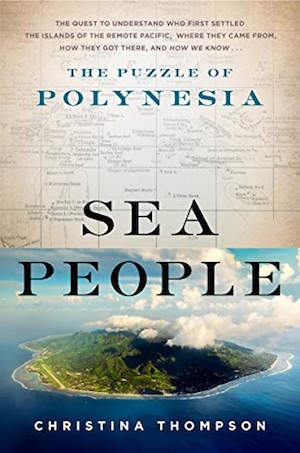
Review: The Sea People by Christina Thompson

Sea People: The Puzzle of Polynesia

Christina Thompson. HarperCollins, 2019. 365 pages. $29.99.

Sea People cover image

By Indira Ganesan

“For more than a thousand years, Polynesians occupied [“an area of ten million square miles in the middle of the Pacific Ocean defined by the three points of Hawai’i, New Zealand, and Easter Island”] and until the arrival of [European] explorers . . . were the only people to have ever lived there,” writes Christina Thompson in her remarkable book Sea People: The Puzzle of Polynesia. How did this culture of isolation come to be and survive so long is one of the fascinating questions about the area. Thompson, the editor of Harvard Review and author of one previous book on New Zealand, sets forth in this book not to so much answer this question, but look at how both European explorers and Polynesian historians and storytellers try to answer this question, and the tremendous difficulties presented by offering one true story.

There are many stories, and the earliest begin at the end of the last ice age when the first people reached the Pacific Islands, while the later begin with the first sighting of the Pacific Ocean by Balboa on September 25, 1513, exactly 507 years ago from the day I type this review. Thompson tracks the European explorers and how they puzzle and posit ideas about Polynesian sea craft and navigation, and the various origin myths of the earliest island inhabitants. Starting with the earliest European explorations of Oceania, the Marquesas, various atolls, New Zealand, and Easter Island, she moves on to James Cook who sails to document the Transit of Venus, an astronomical phenomenon in which Venus crosses the Sun as a shadow, occurring twice in an eight-year period in one century. (We last witnessed it in 2017.) Cook’s voyage on the Endeavour meant to take him to New Zealand, but because of the prevailing winds, brought him to Tahiti. Here, he meets a remarkable man named Tupaia who sails with him to other islands, creating in the process an accurate chart of the islands in Central Polynesia. Language enters as a dominant player in Thompson’s narrative as of course it is in any traveler’s tale. The lack of a common language mystified both European sailors and Polynesians, leading to misunderstanding and animosity. Subtilties in language steered Cook off course as Tupaia tried to navigate him through the Pacific winds. But the ease in which Tupaia could communicate with the people of an island some 3,500 miles from his homeland opened up the possibility that the Polynesian people themselves had a common ancestry, though separated by vast differences.  

Again and again comes the question of how did people navigate the Pacific, with such strong winds that entire islands were made invisible by ships that sailed by them? Some possibilities are found in the mythologies of the Polynesian, and some are imposed by European social anthropologists. Thompson investigates the inherent racism in the European quest to solve the Polynesian question, the inability to conceive of a culture that had little if anything in common with them, of a people that could be capable of an existence outside their sphere of influence. In the end, the questions remain, and she sides with the call of the remote itself, the appeal of the unknown, and the itch to investigate, to travel. Elegantly, she imagines the scene when Polynesian men first disembark from a canoe and discover a new world, a fitting end to a narrative that emphasizes interpretation as much as fact, and the use of the imagination in the quest for knowledge. 

Novelist Indira Ganesan was inducted into Phi Beta Kappa at Vassar College in 1982. Her books includeThe Journey (Alfred A. Knopf, 1990), Inheritance (Alfred A. Knopf, 1998) and As Sweet As Honey (Alfred A. Knopf, 2013).

Posted on October 16, 2020

The Key Reporter