Author Archives: indiraganesan

Unknown's avatar

About indiraganesan

Writer. As Sweet As Honey:A Novel (NY: Alfred A. Knopf), February, 2013 Inheritance: A Novel (NY: Knopf), 1998 The Journey: A Novel (NY:Knopf), 1990 All available from Vintage & Beacon Press

White Lily

https://youtu.be/wf0q7q9Zu5Y

White Lily (Home of the Brave) (Live) by laurie Anderson


There is something about this clip from Home of the Brave that strikes me every time I hear/see it.  The question and answer.  The sense of days going by, pulling us into the future.  It is almost a month since we’ve been asked to shelter in place in Massachusetts.  Spring tosses its head, allowing rain, wind, gust, and sun, without pattern.  The trees are budding, first pink, then in the diustant cardinal red.  There are green leaves, and have been appearing since March began. Somehow, the garbage men still arrive to take away the bins every week, and this always reassures me, somehow.  So far, in my town, anyway, we still have recycling being picked up as well.  A headline caught my eye: it’s not all cooking and quality time.  A poem by teacher and writer Jessica Salfia composed of first lines of emails she received while in  quarantine  went viral: https://twitter.com/jessica_salfia/status/1249000027198033922

I spend more time on instagram and face book than before.  My schedule each day is wake, eat, read, eat,write, eat, television, sleep, punctuated by a conversation on the phone now and then, sprinkled with social media throughout.

There have been happy discoveries: Goldie Hawn silly-dancing on instagram. A breathtaking video of steamed bread-making:

Recipes that turn out well.

Roses that arrived in the mail, now planted, which might grow well, maybe.

Zoom meetings with friends.

The occasional egg cream.

The cats who interrupt my staring into space.

These are a few of my favorite things during this period in time, our 2020.


Music for these times

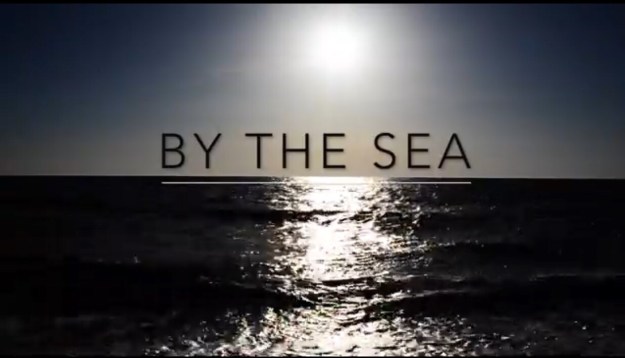
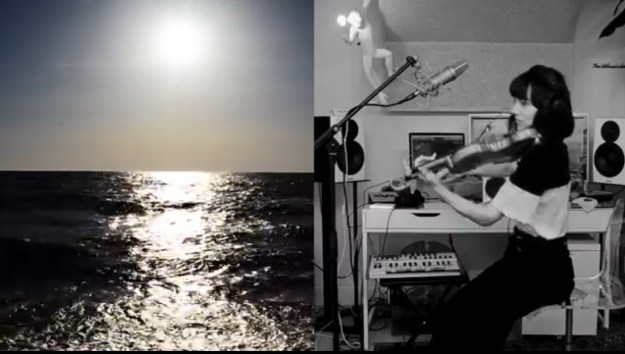
By the sea: a recording by Anna Phoebe

https://youtu.be/WJPbNBFPd98

I have not had too much to say these days, relishing the quiet, perhaps, though missing seeing other people. Spending far too much time on social media, yet it is often time well spent in terms of discovering moments of beauty. This song is such a one. If you go on instagram and search for Anna Pheobe Music, you will see an amazing collaborative pice on violin and keyboard, dedicated to all the health care workers. Poetry. I hope all if you are keeping well, finding moments of inspiration in the quiet.

Review of Firsts: 100 Years of Yale Younger Poets

Firsts:100 Years of Yale Younger Poets

Carl Phillips, editor. Yale University Press, 2019. 400 pages. $65.00.

By Indira Ganesan

Firsts is a curiously democratic gathering of poems by poets who have won the Yale Younger Poets Prize. The title could stand for the first time these poets were brought into prominence by winning a prize, or that they rank first in the company of poets. Each poet gets three poems, much like the guidelines of a proper contest. At first, the anthology seems to be about the judges. Indeed, the editor has written an introduction that is mostly about the judges of the prize, and if you turn to the end, you will find a list of judges, listed by year, followed by a list of the winning poets. Turning to the poems, you might be mildly irritated that each poet is presented to the reader with a mini cv, stating place of birth, books, and prizes, as well as occupation. Could there be a stuffier volume of poems? What was Carl Phillips thinking, augmenting tweediness with tweed, the fustiness of academia?

Obviously, Phillips knew what he was doing. The judges are after all those who curated what was fit to be a “first,” and guided the way poetry was presented to the public. Diversity as he points out in the excellent introduction, did not arrive with regularity until after 1998, helped by the founding of Cave Canem, which fostered the growth of African American poetry in 1996. Before 1998, only two writers of color, Margaret Walker and Cathy Song, were awarded the prize. He also discusses how World War I had an effect in the psychological makeup of the poets in the series before 1932, with “these poets writing the only poems they could, in the best ways they knew.” Thus, a certain sentimentality enters the verse, before Modernism takes the helm.

As for the selection, after you let out the steam of having read resume after resume of each poet, steam which might arrive at least in part from your own ego, you discover a pretty neat set of poems. Here is Cathy Song describing music as squares of birthday chocolate. Here is Leslie Ullman telling us that “The entire population/has forgotten how the bodies of its women / emerge at night before sleep.” Here is Davis McCombs describing “cave wind” turning to fog, all metaphor and beauty and thinking. Here are James Wright, Alan Dugan, Carolyn Forche, Olga Broumas, and a host of others—most of whose names, I confess, are unknown to me.

One need not read the volume in sequence. Treat it like the I-Ching, and encounter poems randomly. Read each aloud and read again. Let these poems enter your mind and heart, for poets are the wisest among us, who can render language into something comprehensible about the world around us and within us.

Novelist Indira Ganesan was inducted into Phi Beta Kappa at Vassar College in 1982. Her books include The Journey (Alfred A. Knopf, 1990), Inheritance (Alfred A. Knopf, 1998) and As Sweet As Honey (Alfred A. Knopf, 2013).


Phi Beta Kappa’s The Key Reporter
(Posted on 3/26/2020 )