1 Reply


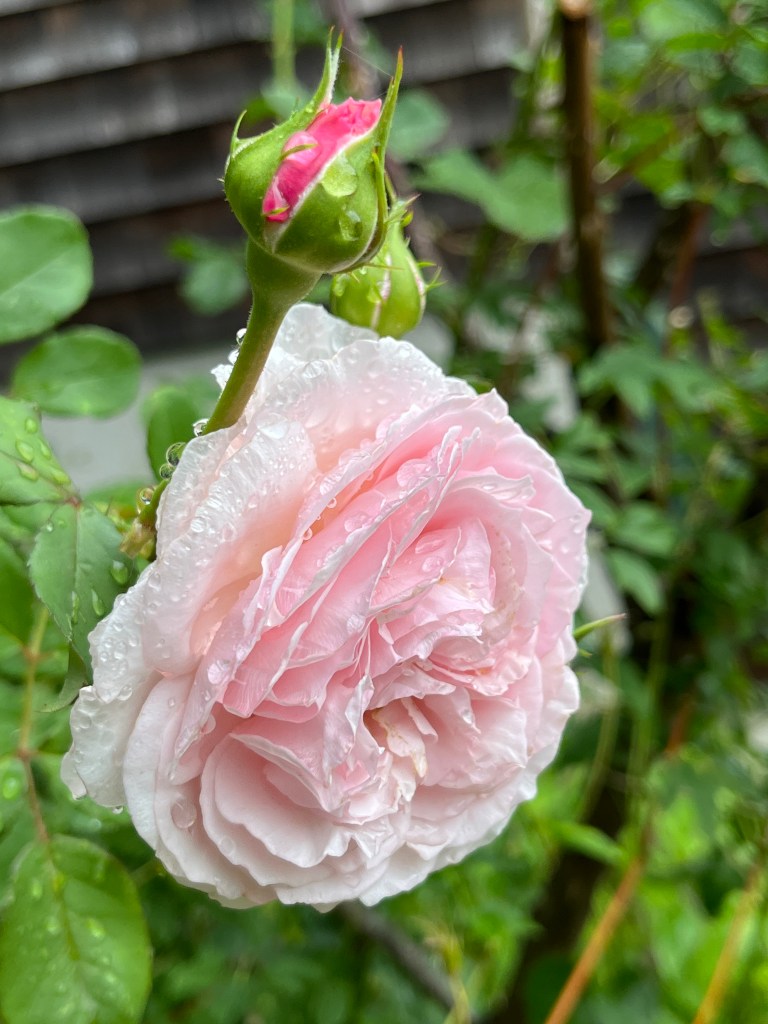
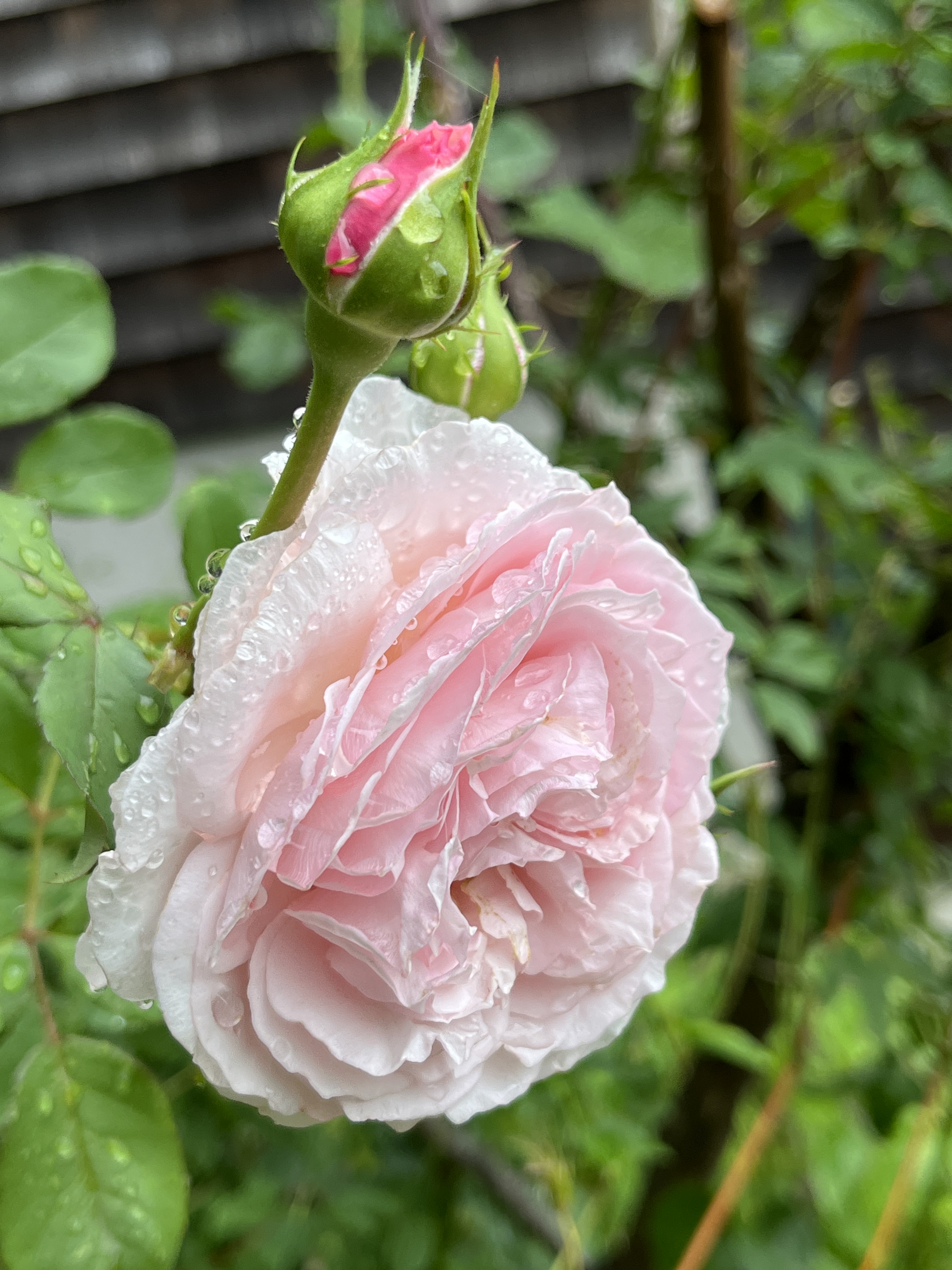
The foxglove is about to bloom. Stalwarts in the garden since I began it more than a decade ago, they never fail to impress me with their startle of color and generosity to the bees. Different strains have come and gone, for nothing ever stays the same in this coastal garden. But I am bidding a sad farewell to the James Galway rose. I got it one impulsive Autumn, maybe in 2012 or 2013, thrilled to score a David Auston on discount, and planted it as a new shrub rose. It grew and grew, becoming an eight-foot climber or maybe even more, with a profusion of heavy petal led fragrant pink roses each year throughout the season. Because I never properly trellised it, the wind would hack off it arms brutally, but it always recovered.
But this year was different. Granted a balmy January that saw the four-year-old, four-foot-high rosemary bush flower with delicate blue flowers, followed by a plunging cold frost in February that killed the entire plant overnight, the garden was a mess. The Galway was a casualty, it’s branches darkened. By now it would be full of glossy green leaves, and full of buds, ready to burst in rosy profusion; instead, it has offered just discolored growth, and acts as a support for a clematis that might be a Betty Corning, with pale blue bells.
Two more roses have died— Desdemona, who always was the last to stop blooming in the fall, and Alnwick, which I never learned to spell, certain there is a “y” in there. Beautiful, tender blooms which I will miss. The old lavender took a beating, and the sage barely survived. The young Bluebeard I recently planted might have died before the frost, and delphiniums are gone. The Iberian iris failed for the first time to make their startling blue appearance, and the bearded iris have yet to set bud. The latter might be my fault, for they probably need to be lifted and divided.
What is left of the roses is a stalwart Munstead, and a recovering Princess Alexandra of Kent, a steadfast Olivia Rose, a tiny, ankle-height Gertrude Jekyll, and the rescue red. The carpet rose survived, a monster plant that used to live in a quart bucket I brought home from a plant sale, but it is riddled with such black spot I should cut the whole thing down before it kills the Munstead. Last year, I moved the bush whose name I have forgotten— let’s call her Kate— and she has grown splendidly. Ah, remembered— it’s a spirea!

The dahlia tubers are planted, though many of them bought from a special New York farm, looked forlorn and wrinkled, with no eyes to see. As a consolation, I bought a special KA sprouted dahlia when it went on sale for too much money, and will see what it brings. So this year’s garden is a kind of hopeless, come what May garden. The weather is against us, and I am right now fighting a dreadful cold virus that leaves me unfit for anything. I traveled, and will travel again, but this time I will wear a mask in both airport and plane, and not eat anything that hasn’t been packed in cellophane..
In the back garden, the ferns have returned, but the hosts is possibly getting eaten by deer. I saw a beautiful doe standing by the highway, greatly frightened as I passed by with my car a few days ago, before I became sick. It is welcome to my hostas, and I hope it survives, or moves on from my soon to be crowded summer town. I am planting more primroses, and popped in small starts of English daisies, and coleus.

As I write this, wildfires rage in Canada, and smoke is turning the midday sun in Some East Coast cities red. Here on the Cape, I am recovering from a cold caught during my travels, but my coughs have doubled because of the smoke, although we are comparatively so much better off than, say, New Jersey, which is really suffering. I don’t know the effect of the smoke on the hummingbirds, which have started to visit the balcony again, or the bees. I cannot think but the effects are severe.
Foolishly, I was tempted out in the garden, my first foray in four days. I had to drive two towns over to pick up my tomato plants which I had ordered back in April, and are now two feet tall. I dropped them off at the vegetable plot in our community garden, where I stayed to water, noting with surprise but not intelligence that no one else was about. No one was about outside when I returned home, and saw that one of the sprouted dahlias needed watering, and really, I ought to move to a better spot, and look,all those black spoofed leaves I needed to pick off the roses and throw away, and I needed to deadhead the genus whose orange brilliance I so love but neglect. On and on, and I had spent a happy hour or more outside, again noticing without comprehending why no one was about on this mild summery day. Only whenI went in did I begin to cough, and remembered the fires.
I will recover from this cold, the rains will come again, but our climate has changed severely. Our gardens will change as well,and we will learn to water less, if at all. Our complacency, though, will still be stopped by the surprise of a bloom, which for at least we can continue to hope.

All day it has been raining a fine drizzle. If rain could be compared to soil–and it can’t, for one is movement, while the other is stationary–I would say the drizzle is like tilth. Titlth is a gorgeous word, that describes a fine-grain soil, black with growth and vital. And this thin drizzle that has been flooding the fields is as potent. There were moments today when it threatened to sleet, and briefly, began to snow in stinging hail-pelt. So much weather yet none of it very threatening, just constant. A sou’wester turned into a nor’easter, a friend said. It is getting stronger as the wind rises. The rain beats on the screens.
I dream one day of writing a big book, but I wonder if I even want to or if it is just a dream I am used to having. I think one writes because one is compelled. Here I am, typing, the Korean drama I am watching on tv paused, as the wind and rain play with each other outside. If I could, I would write a story about my cat, who was abandonned as a pregnant youngster in the Bronx, at a vet’s office, and rescued to Cape Cod, where I sheltered her and her four kittens for a while as she nursed them. Three kittens were adopted, my heart breaking each time, but one stayed with me, along their mother. Now my cat is ailing, and a slew of symptoms accost her. Luckily, her kitten, who is now nearly ten, is fine, strengthened I think by the very fine milk she provided her for at least four months, if not longer. How my cat loved to nurse, and how my kitten loved to eat. So that is the story I would write, not knowing the ending.